
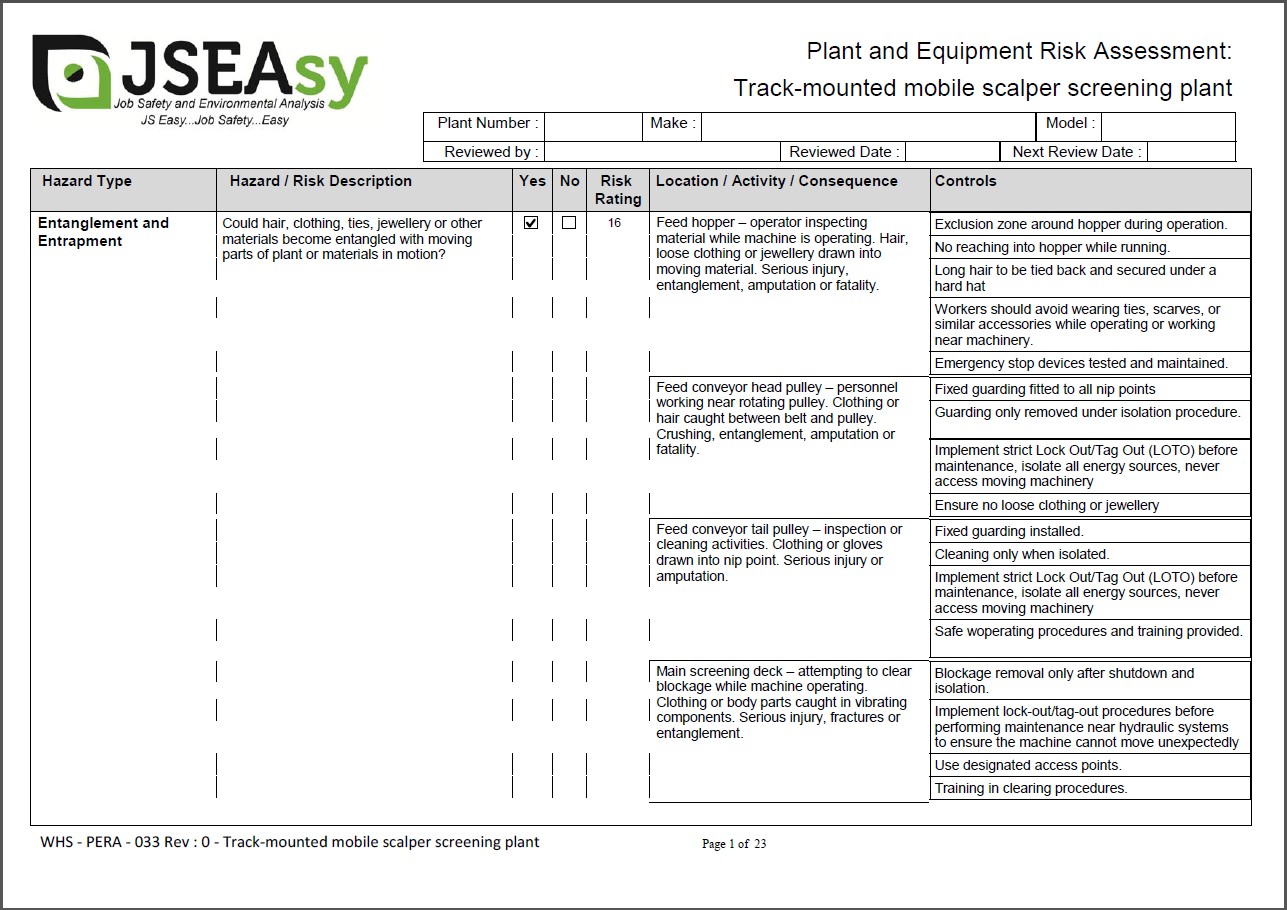
Track-Mounted Mobile Scalper Screening Plant PERA
Plant & Equipment Risk Assessment (PERA)
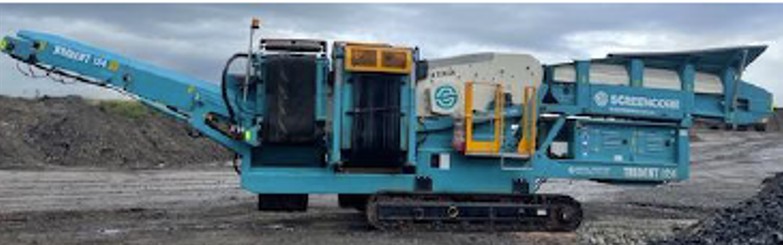
The Screencore Trident 124 and similar models Track-Mounted Mobile Scalper Screening Plant is a high-production mobile screening unit used in quarrying, recycling, demolition, and bulk material processing applications. Designed for mobility and throughput, it incorporates conveyors, vibrating screen decks, hydraulic systems, diesel power, and tracked undercarriage movement.
While highly efficient in processing materials such as soil, sand, gravel, overburden, and demolition waste, the operation of this plant introduces a range of serious safety and environmental hazards that must be assessed and controlled before and during use.
This PERA identifies the key risks associated with operation, maintenance, transport, and site setup of the Track-Mounted Mobile Scalper Screening Plant and outlines practical control measures aligned with the hierarchy of control and WHS requirements.
Key Hazard Categories Covered in this PERA
This Plant & Equipment Risk Assessment addresses the following hazards associated with the Screencore Trident 124:
- Entanglement with moving conveyor and screening components
- Striking by ejected or falling material
- Crushing, pinching and shearing points during operation and maintenance
- Cutting, stabbing and puncture hazards from screen media and wear components
- Electrical shock from damaged or poorly maintained electrical systems
- Fire and explosion hazards from fuel, hydraulic oil and hot surfaces
- Noise exposure from engine, conveyors and screening action
- Dust, fumes and vapours including respirable crystalline silica exposure
- Slip, trip and fall hazards around plant and stockpiles
- Environmental impacts including soil contamination, vegetation disturbance and waterway blockage
- Cultural heritage disturbance risks
- Interaction with mobile plant during tracking, loading and relocation
Typical Operational Hazards and Controls
Entanglement, Crushing, Shearing and Impact Hazards
The screening plant contains multiple high-energy systems including conveyors, vibrating screens, hydraulic folding components, and tracked propulsion systems. These create significant risks during operation, setup, and maintenance.
Controls include:
- Fixed guarding on all moving parts
- Lockout/Tagout (LOTO) procedures
- Exclusion zones during operation and tracking
- Mechanical locking pins and supports
- Operator competency and supervision
The Trident 124 contains multiple moving systems including conveyors, vibrating screen decks, hydraulic folding components and tracked propulsion. These create significant risks of entanglement, crushing, shearing and impact injuries.
Key controls include:
- Fixed guarding on all moving parts
- Exclusion zones during operation and plant movement
- Lockout/Tagout (LOTO) for maintenance activities
- Mechanical locking pins and supports for elevated components
- Operator competency and supervision
- No access policy for operating conveyors or screen decks
Striking Hazards
Material is continuously fed and separated through the screening process, creating the potential for high-velocity ejection of rock, debris and oversize material.
Key controls include:
- Physical guarding and containment systems
- Defined exclusion zones around hopper and discharge conveyors
- PPE including hard hats, safety glasses and high-visibility clothing
- Controlled feed size and loading procedures
- Safe distance separation between excavators/loaders and personnel
Electrical Hazards
Electrical risks arise from temporary site power supplies, generator systems, damaged leads and plant-mounted electrical control systems.
Key controls include:
- RCD protection on all circuits
- Regular test and tagging of electrical equipment
- Inspection of leads, plugs and connectors before use
- Qualified electricians for all electrical maintenance
- Isolation and LOTO procedures before access to control panels
- Protection of electrical systems from water and physical damage
Fire and Explosion Hazards
Fire risks exist due to diesel fuel, hydraulic oil, hot engine components, electrical faults and combustible dust accumulation.
Key controls include:
- Refuelling with engine off and cooled components
- Spill kits available and maintained on site
- Regular inspection of hydraulic and fuel systems
- Hot work permit systems for maintenance activities
- Fire extinguishers fitted and accessible
- Housekeeping to prevent dust and oil accumulation
Dust, Fumes and Vapours
The screening of dry or demolition materials can generate airborne dust, including respirable crystalline silica. Diesel exhaust emissions are also present during operation.
Key controls include:
- Water suppression systems where applicable
- Dust monitoring and exposure assessment
- Respiratory protection programs where required
- Engine maintenance to reduce emissions
- Positioning personnel upwind where possible
- Minimising drop heights and material disturbance
Noise Exposure
Normal operation produces continuous high noise levels from engine operation, vibration of the screen deck, and material impact.
Key controls include:
- Hearing protection zones (HPZ) established
- Hearing protection (Class 4–5 depending on exposure levels)
- Maintenance of mufflers and wear components
- Limiting exposure duration through job rotation
- Noise monitoring where required
Slip, Trip and Fall Hazards
Uneven terrain, spilled material, hoses, and working platforms present ongoing slip and trip risks.
Key controls include:
- Good housekeeping and regular clean-up
- Defined walkways and exclusion zones
- Anti-slip access surfaces and platforms
- Cable and hose management systems
- Adequate lighting for low visibility conditions
Environmental Hazards
Soil Contamination
Risk from fuel, hydraulic oil, and lubricants leaking into ground.
Controls:
- Spill prevention and response procedures
- Drip trays and containment during maintenance
- Regular inspection of plant systems
- Proper waste disposal practices
Waterway Blockage
Stockpiles and sediment runoff may block creeks or drainage systems.
Controls:
- Maintain buffer zones from waterways
- Sediment and erosion control systems
- Controlled stockpile placement
- Site drainage management planning
Vegetation and Habitat Disturbance
Plant movement and setup can result in vegetation removal and habitat disturbance.
Controls:
- Defined work boundaries
- Environmental site clearance prior to works
- Restriction of plant movement to approved areas
- Rehabilitation of disturbed areas
Cultural Heritage Disturbance
Ground disturbance may impact unknown or protected cultural heritage sites.
Controls:
- Cultural heritage assessment prior to work
- Exclusion zones and site controls
- Stop-work procedures for unexpected finds
- Compliance with heritage legislation
Summary
The Screencore Trident 124 Track-Mounted Mobile Scalper Screening Plant is a high-risk item of mobile plant due to:
- Continuous moving mechanical systems
- High-energy material processing
- Mobile tracked operation in variable environments
- Hydraulic and electrical systems under load
- Environmental interaction with ground disturbance and material handling
Effective risk control relies on a combination of:
- Engineering controls (guards, isolation systems, containment)
- Administrative controls (procedures, exclusion zones, training)
- PPE (hearing, respiratory, eye and head protection)
- Environmental management controls (dust, spill and erosion control)
This PERA should be reviewed prior to deployment, when site conditions change, or when modifications to the plant or work method occur.
What This PERA Delivers
This mobile scalping screen PERA provides:
✔ Fully structured hazard-by-hazard risk analysis
✔ Practical, field-based control measures
✔ Alignment with Australian WHS legislation
✔ Clear operational and maintenance safety controls
✔ Ready integration into SWMS and site safety systems
Integration With Safety Systems
This document is designed to integrate seamlessly with:
- Safe Work Method Statements (SWMS)
- Safe Operating Procedures (SOPs)
- Site Traffic Management Plans
- Plant maintenance systems
- WHS management systems and audit frameworks
- JSEAsy Safety Software workflows