
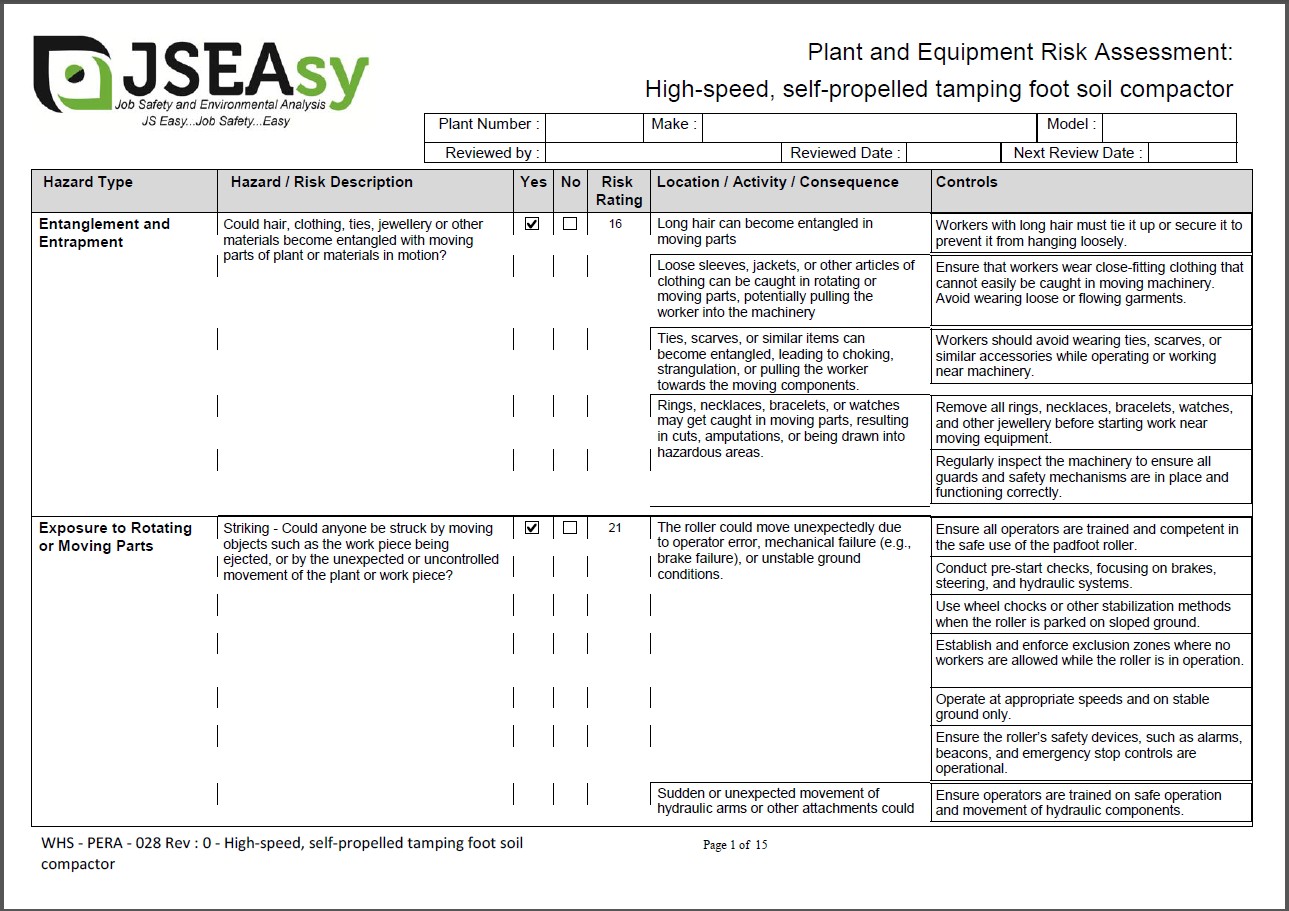
High-Speed Tamping Foot Soil Compactor Plant and Equipment Risk Assessment (PERA)
Ensure the safe operation of high-speed, self-propelled tamping foot soil compactors with this professionally developed Plant and Equipment Risk Assessment (PERA).
Also know as:
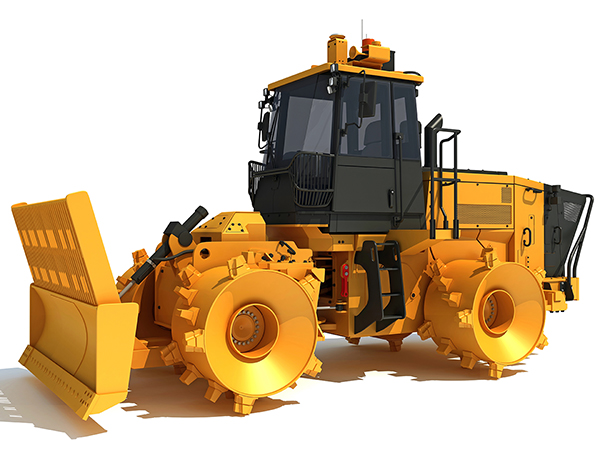
- Tamping Foot (or Padfoot) Compactor: This refers to the specific design of the steel drums, which feature tapered “feet” or pads that penetrate the soil to compact it from the bottom up.
- Sheepsfoot Roller: A common industry nickname derived from the historical use of actual sheep to trample and compact earth.
- Four-Wheel Drive Compactor: Unlike single-drum rollers that have tires on one axle, this is a dedicated four-wheeled machine, often sharing a chassis design with a wheel loader.
- Static Compactor: It relies entirely on its massive operating weight (often over 20 tonnes) and high ground pressure to achieve density, rather than using the vibration found in “vibratory rollers”.
- Spreader-Compactor: Because it is standard to have a front-mounted “strike-down” blade, it is frequently described by its dual role of leveling fill (spreading) and compacting it in a single pass.
- In large-scale earthmoving contexts, operators might simply call it a “815” (Cat 815 Soil Compactor) or a “packer”.
Purpose-built for Australian civil and construction worksites, this document helps you identify hazards, implement effective control measures, and maintain compliance with WHS obligations when operating tamping foot compactors in demanding ground conditions.
Developed using JSEAsy Safety Software, this PERA is available for instant download.
Product Overview
High-speed tamping foot soil compactors are specifically designed for compaction of cohesive soils, but their operation introduces significant risk factors—particularly due to aggressive compaction action, machine vibration, and operation on variable ground conditions.
This PERA provides a structured, pre-completed risk assessment framework to help you quickly identify and manage these risks on-site—without starting from scratch.
A Plant and Equipment Risk Assessment is a systematic process used to identify, assess, and control risks associated with machinery use, ensuring safe operation, maintenance, and handling in accordance with Australian WHS requirements.
Key Hazards Covered
This risk assessment specifically addresses:
- Roll-over and instability on soft, uneven, or sloping ground
- High-speed travel and loss of control
- Dynamic compaction forces affecting ground integrity
- Pedestrian interaction and exclusion zone breaches
- Entrapment hazards at articulation points and moving components
- Whole-body vibration (WBV) exposure to operators
- Noise and airborne dust, including silica risks
- Mechanical failure (hydraulic, braking, steering systems)
- Compaction near trenches, batters, and underground services
Why You Need This PERA
Operating high-speed compaction equipment without a structured risk assessment significantly increases the likelihood of incidents, plant damage, and non-compliance.
Using a standardised PERA ensures:
- Compliance with Australian WHS legislation
- Consistent and thorough hazard identification
- Reduced risk of injury, plant incidents, and downtime
- Improved communication of safety controls to workers
- Audit-ready documentation for clients and regulators
JSEAsy templates are designed to eliminate gaps commonly found in generic or manually created safety documents.
Who Is This For?
This PERA is ideal for:
- Civil and earthworks contractors
- Construction companies
- Plant operators and subcontractors
- Site supervisors and project managers
- WHS managers and safety professionals
If your work involves mechanical compaction of cohesive soils using tamping foot equipment, this document is essential.
Key Features
- Instant download
- WHS-compliant structure
- Developed using industry best practice
- Suitable for integration into SWMS and broader safety systems
- Consistent with recognised risk management frameworks such as ISO 31000
Document Format:
- Delivered in PDF format. We can add your logo and details of a particular make and model at no additional cost.
- Fully printable
- Includes risk matrix and risk ratings
Why do you need a PERA?
Under Australian WHS laws, employers and contractors are required to identify and manage risks related to plant and equipment. Padfoot Rollers carry notable dangers due to their mechanical parts, and the environments in which they operate.
The requirements are outlined in the Managing risks of plant in the workplace code of Practice.
This PERA helps ensure your team works safely and your business remains compliant and audit-ready.
Ensure safety, compliance and peace of mind — in minutes, not hours.
With JSEAsy Plant & Equipment Risk Assessment Software, you can instantly generate WHS-compliant risk assessments, link them with SWMS and SOPs, and centralise all your plant registers and maintenance schedules. Designed for businesses managing any scale of machinery—from a single tool to full fleets—JSEAsy streamlines your safety workflows, reduces errors from paperwork, and keeps you audit-ready at all times
Need more than one PERA or other Safety Documents?
The JSEAsy EHS Software takes your safety management to the next level—allowing you to create, manage, and update SWMS, risk assessments, and other safety documentation all in one central platform. With built-in templates, version control, and cloud-based access, it’s designed to save time, improve consistency, and help your business meet ongoing WHS obligations with ease.
Key Features of JSEAsy Software
Preloaded SWMS, SOPs and Risk Assessments
Access a vast library of ready-to-use templates across construction, maintenance, and high-risk industries.- Fully Editable Templates
- Safe Work Method Statements (SWMS)
- Plant and Equipment Risk Assessments
- Safe Operating Procedures
Centralised Safety Documentation
Keep all your safety documents in one secure place—easily accessible on desktop or cloud (depending on plan).Project-Specific Job Packs
Automatically generate full WHS job packs including SWMS, risk assessments, training records, permits, and sign-off sheets.Version Control and Auto Updates
Maintain consistency and compliance as templates are updated with regulation changes.Staff and Contractor Management
Track inductions, licences, and competencies—ideal for small teams or larger subcontractor networks.Simple Interface
Intuitive menus and guided workflows make it usable even by those with limited admin or computer experience.Multi-user Access (Multiuser and Premium Version)
Collaborate across your team or sites with secure role-based access.